Partisanship and confession
Part I: Confession and the Virtue of Good Partisanship
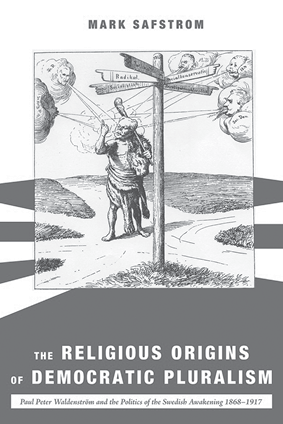
The Religious Origins of Democratic Pluralism: Paul Peter Waldenström and the Politics of the Swedish Awakening, 1868-1917
By Mark Safstrom
Wipf and Stock, 2016
302 pages
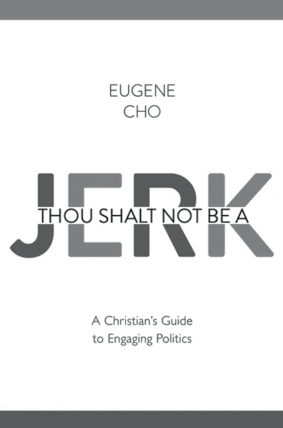
Thou Shalt Not Be a Jerk: A Christian’s Guide to Engaging Politics
By Eugene Cho
David C Cook, 2020
272 pages
Partisanship in the United States is on the decline. The number of Americans who identify as politically independent has reached historic highs after a decades-long trend of disaffiliation. Among many factors, this appears to be the natural result of an electorate fatigued by national polarization, aggressive campaigning, and an angry divisiveness leading to government dysfunction. It might be tempting to interpret a rise in political disaffiliation as something to celebrate — perhaps especially for those of us who are Pietists with a free-church heritage that affirms the importance of being able to hold independent beliefs.
However, trends like this lead to statistical realities such as that in effect only 10 percent of voters are selecting 83 percent of Congress through primaries (according to the Unite America Institute). More difficult to measure but inarguably on the rise is “negative partisanship,” where you may not like either party but you consistently hate one more than the other and so vote accordingly. This culminates in what political scientists Daniel Schlozman and Sam Rosenfeld have termed “hollow parties”: organizations that despite their buzzy and expensive activity are ineffective at governing, illegitimate as stewards of representative democracy, and unmoored from local communities and ordinary people. The scholarly consensus is that polarization today is being driven by the relative weakness of both major political parties as organizations.
It appears to me that good partisanship is a virtue now lacking in American society. When I pivoted from congregational ministry to the pro-democracy field, I was struck by how eerily similar the former’s frustration with folks who identify as “spiritual but not religious” was as the latter’s frustration with citizens who identify as “political but not partisan.” Is there a common thread between the two? It could be taking for granted the institutions that give structure and expression to our various beliefs, or confusing a valid critique with a permission slip to exit entire systems.
I do believe there is such a thing as an American covenant — not something we made with God as an unbiblical category of a second chosen people, mind you, but rather as something “We the People” made with and have inherited from each other. My assertion is that Christians are called to steward this covenant. When I see this American political project under strain my inclination is to turn to my faith tradition for wisdom.
Unfortunately, there is not much there, at least in terms of articulating good partisanship as a virtue beyond a vaguely described centrism. In the 19th century, P. P. Waldenström articulated nonpartisan aspirations early over the course of a decades-long political career as an independent politician in the Swedish parliament. As a visiting student at North Park Theological Seminary, I remember a diagram on the whiteboard: there was a horizontal line representing the worldly left-right political spectrum, and then above that in the center a vertical line representing the location of the Kingdom of God from which we were to align our politics. Today, one of the Evangelical Covenant’s most prominent political voices is Eugene Cho, president of the Washington DC-based advocacy organization Bread for the World. The merits of this work notwithstanding, the first chapter of Cho’s book on Christian political engagement nevertheless is titled: “Thou Shalt Not Go To Bed With Political Parties.”
Our tradition contains and celebrates peacemaking nonpartisans and prophetic antipartisans. But I believe there is room for one more political orientation: practitioners of good partisanship.
In the terms of our own tradition, why does good partisanship matter? I can think of three reasons. First, in the current political moment, nonpartisanship can cynically be twisted into a sort of civic disengagement that authoritarianism thrives on, blurring our commitment to seek no other authority. Second, good partisanship is a guardrail keeping our prophetic witness from devolving into political oracularity, a self-congratulatory voice that avoids contemplating the real tradeoffs that make real improvements in the lives of real people. Third, there is a spiritual danger in silencing the convictions laid upon our heart, not least because it is unneighborly to not be in coalition with those who share our convictions, but also the danger of holding our disagreements in secret where they may fester and rift.
To cultivate good partisanship, I suggest we turn our attention to another practice that we Pietists may find as uncomfortable as partisanship: confession. My argument, that confession can inform and structure our approach to partisanship, hinges on the double valence of confession: that is, confession can be confession of faith in God, or confession of sins.
This double valence is not just an accident of the English language but is rooted in the biblical Hebrew יָדָה (yadah), which is used both for expressing a grateful allegiance (e.g., Psalm 18:49 NRSV: “I will extol you, O LORD, among the nations”) and penitence for sins (e.g., Psalm 32:5 NRSV: “I will confess my transgressions to the LORD”). The verb יָדָה itself is derived from the noun יָד (yad) or “hand,” suggestive of the throwing motion that accompanied a ritual act of yadah-ing. Confession, embodied in this distilled ancient sense, is the giving outwards of something from inside of us that results in a more open, courageous, and vulnerable orientation to the world.
The Pietist discomfort with confession comes from both sides. When it comes to confession-of-faith, we have the charge from early Covenant leaders like David Nyvall to hold scripture as our only confession above any interpretative creed or other written statement. When it comes to confession-of-sins, we have inherited Martin Luther’s disdain of the Roman Church’s human-mediated absolution via private confession. Our Swedish brethren remember this disdain by having a distinct word for an individual sacramental confession, bikt, versus another word for corporate liturgical confession, syndabekännelse. Based on my reading of the movement, it is only this last variant — “collective-confession-of-sins” — that is broadly acceptable among Pietists.
The same obstacles that keep Pietists from being good partisans are the same obstacles that make us allergic to confession. First, as it relates to confession-of-faith: whether it comes to our interpretations of scripture or our political beliefs, we value our independence of thought as a corollary to individual piety. Waldenström’s contemporary, the humanist Norwegian playwright Henrik Ibsen, has a protagonist who expressed the age’s animosity towards partisanship best: “A party is like a sausage machine; it mashes up all sorts of heads together into the same mincemeat — fatheads and blockheads, all in one mash!” Conformity within parties, it was further believed, led to faultlines between parties that drove national disunity.
Second, Pietists are skeptical of individual confession-of-sins as a nexus of institutional discipline and control. As mentioned, Luther’s articulation of this vis-à-vis the Roman Church is a well-known example of this. One might also reread Elder Lindahl’s “Case of the Disturbed Corn Flakes” in the Summer 1991 issue of Pietisten, which articulates this humorously but no less rigorously (vis-à-vis a childhood incident involving an overzealous camp director at Covenant Point). Similarly, Waldenström, Nyvall, and Ibsen alike may have also understood parties as potentially coercive towards individuals. The idea of a secret ballot was not widespread until the late 19th century, and Sweden technically didn’t fully implement secret ballots until 2019. Before the secret ballot, a lack of privacy meant local party members of the time theoretically could be subject to institutional party discipline if they reneged with their vote.
My argument here isn’t to transplant a creed or the sacrament of penance into our theological imagination, but rather to raise awareness of how the roots of our ambivalence towards confession also hinders us from being partisans in this moment. I believe a little bit of good partisanship can go a long way for our political witness in the world. Others with more expertise in liturgy and spiritual formation than me may go a different direction on this as it relates to reclaiming confession in general; here, I am going to dispel some myths about partisanship.
First, parties can be centers of deliberation as much or even more so as they can be enforcers of a set of political beliefs. By emphasizing certain issues, policies, and values for debate, political parties shape the public square not just for partisans but for everyone. As political theorist Nancy Rosenblum writes (in “On the Side of the Angels: An Appreciation of Parties and Partisanship”), it is through the competition between parties that “focuses attention on problems, information and interpretations are brought out, stakes are delineated, points of conflict and commonality are located, the range of possibilities winnowed.”
Bulwarking the public discourse against being monopolized by a single ideology was one manner in which Waldenström leveraged his political independence; paradoxically, those who wish to follow in Waldenström’s footsteps in our polarized time may find more success raising the bar of our civic discourse by working within and through party structures.
Furthermore, healthy parties and good partisans also welcome intra-party debate to determine what should be emphasized in an election cycle, balancing a platform that appeals to enough voters to win but is not so broad that nothing important is at stake. Rather than top-down discipline, parties can also be bottom-up sources of action, a vehicle to mediate our individual convictions upward so that they don’t get lost in the collective wash of the democratic masses. Very few of us will ever be privileged to cast the deciding vote on Election Day, but at least some of us have the opportunity to be influential within today’s party structures, especially at the local level.
Just as some of Pietism’s theological biases against confessions help explain our ambivalence towards partisanship, so too can understanding partisanship as a kind of civic confession provide a way for those among us who are compelled to be active in a political party a path to do while remaining consistent with a Pietist ethos. In Part II of this essay in the next issue of Pietisten, I will articulate what such a “partisan confession” might look like in practice.